AI and the Brain: Answering the Questions Everyone's Asking

The uptake of AI has moved from a novelty to daily habit for hundreds of millions of people in the space of a few years. That speed has left the science trailing the adoption, but a wave of studies published over the past year are starting to give real answers to the questions people are actually asking. While the evidence in the neuroscience field is still in its infancy, there are some interesting themes emerging. Below are some common questions I’ve encountered over the past year by concerned AI users from a variety of backgrounds and industries, with some associated early evidence.
Is AI making us worse thinkers?
Not exactly, but it does seem to be changing when and how hard we think. The clearest evidence comes from MIT Media Lab’s “Your Brain on ChatGPT” study, which had 54 participants write essays while wearing EEG headsets, either using ChatGPT, using a search engine, or working entirely unaided. The unaided group showed the strongest, most widespread neural connectivity during the task; the search-engine group was intermediate; the ChatGPT group showed the weakest overall neural coupling. That doesn’t mean people using AI produced worse essays. In fact, human and AI judges often scored the AI-assisted essays competitively. What changed was how much cognitive work went into producing them, and how well people retained what they’d made. In the first session, 83% of ChatGPT users couldn’t correctly quote a sentence from an essay they’d written minutes earlier, compared to about 11% in the other two groups.
If I stop using the AI, does my brain “snap back”?
Not immediately, according to the same study. A subset of participants was reassigned to the opposite condition in a fourth session — people who’d used ChatGPT for three sessions had to write unaided, and vice versa. The group moving from ChatGPT to unaided writing still showed weaker neural connectivity and reduced engagement, even with the tool taken away. The carryover suggests the effect isn’t purely situational — something about sustained AI reliance seems to persist for at least a little while after the tool is gone. The reverse was more encouraging: participants moving from unaided writing to ChatGPT showed a network-wide spike in connectivity and higher recall, suggesting the deficit isn’t necessarily permanent, just slow to reverse.
Do we actually trust AI too much as a society?
Most likely. A Wharton team ran three preregistered experiments with 1,372 participants, giving them reasoning problems where an AI assistant was sometimes deliberately programmed to produce wrong answers. When the AI was wrong, about 80% of participants followed it anyway, performing worse than if they’d had no AI assistance at all. Trust in the AI was the strongest predictor: people who trusted the tool more had roughly 3.5 times greater odds of following its faulty answers. Only around 20% of participants actively caught and overruled the AI’s mistakes. The researchers call this pattern “cognitive surrender”, which refers to a conscious decision to trust AI, but a quiet failure to scrutinize what it produces. A related survey of knowledge workers by Microsoft and Carnegie Mellon researchers found the same effect in real workplace use: higher confidence in generative AI tracked with less critical thinking, and a shift from active problem-solving toward passive review of AI output.
Does using AI to check facts make me better at spotting misinformation on my own?
Apparently not much. A follow-up MIT Media Lab study found that conversations with AI reduced people’s belief in misinformation in the short term but built no lasting ability to detect it independently. The researchers compare this to how GPS may have eroded our capacity to navigate without it….the tool solves the immediate problem without transferring the underlying skill. So it may be that our brains are being wired to decrease the ability to objectively scrutinize the information around us.
Is AI making everyone think and write more alike?
There’s early evidence of this too. In the MIT essay study, ChatGPT-assisted essays converged on more similar language and content than essays from the unaided or search-engine groups. In other words, participants using AI tended to reach for the same phrasing and the same named entities. A separate, broader paper in Trends in Cognitive Sciences looked at this at scale across large language model usage and found a similar homogenizing effect on human expression and thought. If AI systems are trained on similar data and tend toward similar “safe” outputs, it stands to reason that heavy reliance on them could narrow the range of how people express ideas, though this is an early and still-developing area of research.
Is this just a problem for students, or does it impact experts too?
Both, but in different ways. Most of the research above involves people still building skills, like students, general knowledge workers, developers. A separate study of computer program developers learning a new coding library with and without AI assistance and found that AI sped up task completion but measurably slowed how well developers actually learned the material. So, what we are seeing is an impact on the rate of skill formation. The shortcut works, but the underlying competence doesn’t develop the same way.
A different and arguably more unsettling finding comes from a year-long study of practicing oncologists. AI assistance improved their diagnostic accuracy but appeared to affect their subjective confidence in their own clinical judgment. This isn’t a failure to learn, but something closer to “intuition rust” in people who already have the expertise. It suggests AI reliance can erode confidence, even in situations where it clearly makes people more accurate.
Does this mean I should stop using AI tools?
The research doesn’t point that way. One of the more useful findings comes from Michael Gerlich, a researcher whose earlier work is often cited as evidence that AI erodes critical thinking. In a follow-up study, he had 150 participants write essays under three conditions: no AI, unguided ChatGPT use, and ChatGPT use with structured prompting. His conclusion was that the offloading effect depends heavily on how people engage with AI, not simply whether they use it. What it suggests is that deliberate, scaffolded use can support critical thinking rather than erode it. In simple terms, that means putting structure, guidance and human oversight around AI so that it improves people’s work without replacing their judgment. That distinction, passive offloading versus active, structured engagement is probably the single most actionable takeaway across this entire body of research.
How solid is all of this, really?
Considering how new all of this is, the data are reasonably solid in direction, but still early in certainty. The flagship MIT study is a preprint, not yet peer-reviewed, with a sample of 54 people (only 18 completed the crossover phase), testing one model (GPT-4o) on one task (short essay writing). The Wharton and Microsoft/CMU studies have larger samples and add real-world workplace data, but every study in this space shares the same limitation of being short-term. Sessions span weeks or months, not years. That’s the biggest open question left in the field: what happens over years of sustained AI use, rather than months, and how that plays out differently for adults with established cognitive habits versus younger users whose skills are still forming. Almost nothing exists yet on that timeline, and it’s the gap every author in this space points to next.
Across writing, reasoning, factchecking, coding, and medicine, a consistent pattern is emerging: AI tools that solve a problem for you tend to reduce the depth of engagement, memory formation, or confidence that comes from solving it yourself. However, the size and duration of that effect look different depending on how deliberately the tool is used. None of the current research supports avoiding AI but rather suggests that you are likely doing your brain a disservice by putting total reliance and unconditional trust in its output.
References:
Gerlich, M. (2025). AI Tools in Society: Impacts on Cognitive Offloading and the Future of Critical Thinking. Societies, 15(1), 6. https://www.mdpi.com/2075-4698/15/1/6
Gerlich, M. (2025). From Offloading to Engagement: An Experimental Study on Structured Prompting and Critical Reasoning with Generative AI. Data, 10(11), 172. https://doi.org/10.3390/data10110172
Kosmyna, N., Hauptmann, E., Yuan, Y. T., Situ, J., Liao, X. H., Beresnitzky, A. V., Braunstein, I., & Maes, P. (2025). Your Brain on ChatGPT: Accumulation of Cognitive Debt when Using an AI Assistant for Essay Writing Task. arXiv preprint arXiv:2506.08872. https://arxiv.org/abs/2506.08872
Lee, H. P., Sarkar, A., Tankelevitch, L., Drosos, I., Rintel, S., Banks, R., & Wilson, N. (2025). The Impact of Generative AI on Critical Thinking: Self-Reported Reductions in Cognitive Effort and Confidence Effects From a Survey of Knowledge Workers. In Proceedings of the 2025 CHI Conference on Human Factors in Computing Systems (CHI ’25), Article 1121. https://doi.org/10.1145/3706598.3713778
Rani, A., Danry, V., Liang, P. P., Lippman, A., & Maes, P. (2026). Dialogues with AI Reduce Beliefs in Misinformation but Build No Lasting Discernment Skills. In Proceedings of the 2026 CHI Conference on Human Factors in Computing Systems (CHI ’26), Article 792. https://doi.org/10.1145/3772318.3790656
Shaw, S. D., & Nave, G. (2026). Thinking—Fast, Slow, and Artificial: How AI is Reshaping Human Reasoning and the Rise of Cognitive Surrender. Wharton School Research Paper / SSRN working paper. https://papers.ssrn.com/sol3/papers.cfm?abstract_id=6097646 (preprint: https://doi.org/10.31234/osf.io/yk25n_v1)
Shen, J. H., & Tamkin, A. (2026). How AI Impacts Skill Formation. arXiv preprint arXiv:2601.20245. https://arxiv.org/abs/2601.20245
Sourati, Z., Ziabari, A. S., & Dehghani, M. (2026). The Homogenizing Effect of Large Language Models on Human Expression and Thought. Trends in Cognitive Sciences. https://www.cell.com/trends/cognitive-sciences/abstract/S1364-6613(26)00003-3 (preprint: https://arxiv.org/abs/2508.01491)
Trending

Psychological Safety Book
May 30, 2018Related
AI Can’t Fix a Psychologically Unsafe Culture at Work
October 5, 2026Why Neuroscience Is the Next Frontier for Coaches
July 31, 2026Share Post



TEDx: The struggle between the emotional and logical brain
In this TEDx talk Dan Radecki explores the idea that our modern brain can over ride our caveman brain.

Improve team performance through psychological safety
Harness the power of neuroscience and build a psychologically safe culture where people thrive, connect, and perform at their best.

Overcoming pandemic panic
Learn about your brain's operating principles, its natural response to uncertainty and unpredictability and some scientifically proven strategies to better manage stress and emotions, and boost your brain health and resilience.

Build trust and belonging – connection through vulnerability
Learn how to leverage neuroscience to effectively build trust and belonging like Herman Miller who has embedded the concept of psychological safety to cultivate connection across their business.

Enhancing diversity, inclusion & belonging
Learn why traditional diversity training is ineffective and why both visible and invisible diversity are critical to building inclusion and belonging.

Building mental and physical wellness & resilience
Understand the brain-based strategies to mitigate the negative impact of stress and build mental and physical health and resilience.

Resilience training that can change the brain
Understand the latest research on behavioral and cognitive strategies that cultivate resilience and change the brain.

The science behind training effectiveness
Science gives us insights into how humans work so we can avoid training pitfalls while creating new and innovative ways to help people develop to their full potential.
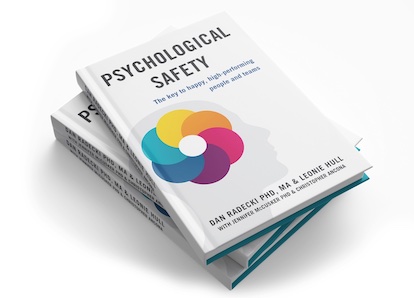
Both academic and industry research identify Psychological Safety as the number one determining factor of successful people and teams. However, until recently we lacked the ability to measure, track or implement strategies for something so intangible and subjective. Thanks to neuroscience research we are now gaining this visibility. This book translates the research to provide valuable insights into the brain – the importance and impact of psychological safety and the strategies to protect and build it personally and collectively.
Learn More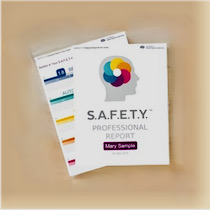
The S.A.F.E.T.Y.™ Model describes six domains of threat or reward that are important to the brain: Security, Autonomy, Fairness, Esteem, Trust and You. Understanding the needs, rewards, motivations, biases and stress triggers of each domain can provide valuable insights into yourself and others and help improve interactions, teamwork and productivity. The S.A.F.E.T.Y.™ assessment ranks and quantifies your brain’s S.A.F.E.T.Y.™ needs and explores the potential impacts of your profile on you and those around you.
Learn More