Loneliness Is More Than a Feeling – It's a Hidden Threat to Workplace Performance

For years, loneliness was viewed primarily as a social problem. If someone felt disconnected, the solution seemed obvious: encourage them to spend more time with other people. New research published in Nature Communications fundamentally changes that perspective.
Using one of the most rigorous scientific approaches ever applied to the question, researchers from the University of Bristol and collaborators demonstrated that loneliness is not simply a consequence of poor mental health—it is an independent driver of declining psychological wellbeing, reduced life satisfaction, and deteriorating overall health.
For organizational leaders, HR professionals, and anyone concerned with workplace culture, this finding carries profound implications.
The Hidden Difference Between Being Alone and Feeling Alone
One of the study’s most important contributions is distinguishing two concepts that are often mistakenly treated as the same. Social isolation refers to the number of relationships a person has. Loneliness reflects the quality of those relationships.
Someone may spend every day in meetings, collaborate with dozens of colleagues, attend conferences, and maintain a full calendar, yet still experience profound loneliness if they don’t feel genuinely understood, supported, or psychologically safe.
Conversely, someone with a relatively small social network can feel deeply connected and thrive. The research found that subjective loneliness (not simply being socially isolated) was the stronger predictor of poor mental health.
For professionals at every level, this distinction matters enormously. Many people have extensive professional networks but very few authentic relationships.
The Science Behind the Finding
Historically, researchers struggled with a fundamental question: Does loneliness make people unhealthy, or do unhealthy people simply become lonely? To answer this, the investigators combined three independent scientific approaches:
- Large population studies
- Comparisons between siblings (controlling for shared childhood experiences)
- Mendelian randomization, a genetics-based method that helps establish causal relationships rather than simple correlations
All three methods pointed to the same conclusion: Loneliness itself contributes directly to poorer mental health and lower wellbeing. That consistency provides unusually strong evidence that loneliness is not merely associated with declining health, but helps drive it.
The Modern Workplace Paradox
Modern organizations are increasingly connected technologically while becoming more emotionally disconnected. Remote work, hybrid teams, and digital communication dominate. Ironically, many employees have never been more connected—or more lonely.
The result is often:
- Chronic stress
- Reduced resilience
- Emotional exhaustion
- Eventually, burnout
This new research suggests that those consequences may be driven not simply by workload but by the absence of meaningful human connection.
Why the Brain Responds So Strongly
Humans evolved as profoundly social organisms. Our brains continuously evaluate whether we belong. When we experience genuine connection, neural systems involved in reward, safety, and emotional regulation become more active.
When loneliness persists, the brain shifts into a more vigilant, defensive state. People become more likely to:
- Interpret situations negatively
- Perceive greater social threat
- Ruminate
- Experience anxiety
- Become emotionally exhausted
Over time these patterns reduce wellbeing and increase vulnerability to depression. The new study reinforces that this is not simply a psychological experience—it produces measurable consequences for overall health.
Connection as a Performance Factor
Organizations often invest heavily in professional development by teaching communication skills, strategic thinking, technical competencies, and decision-making. While all of these matter, the fact remains that one of the strongest predictors of sustained workplace performance may be something far more basic: The ability to build authentic human connection.
Trust, psychological safety, belonging, and empathy are not “soft skills.” They represent biological conditions that allow the brain to perform at its highest level.
Teams that feel connected:
- Think more creatively
- Recover from setbacks more quickly
- Collaborate more effectively
- Demonstrate greater resilience under pressure
Questions Worth Asking
Whether you’re reflecting on your own experience or considering your team’s wellbeing, these questions matter:
- Who truly knows you at work?
- Where can you be completely authentic?
- Which relationships consistently restore your energy?
- When was the last time you felt deeply understood by a colleague?
- Are you surrounded by people—or genuinely connected to them?
These reflections may ultimately influence wellbeing and performance just as much as discussions about productivity or career strategy.
A New Organizational Priority
Perhaps the most important conclusion from this work is that loneliness should no longer be viewed as a private emotional struggle. It is a measurable health risk. The researchers found consistent evidence that loneliness contributes to poorer mental health, reduced life satisfaction, and worse overall health. While they did not find definitive proof linking loneliness to individual diseases such as heart disease or diabetes, they observed an increased likelihood of poorer self-rated health and living with multiple chronic conditions simultaneously.
For organizations, this means employee wellbeing initiatives should evolve beyond perks and engagement surveys. Creating cultures where people genuinely feel seen, valued, and connected may be one of the most powerful investments a company can make—not only for wellbeing, but for innovation, resilience, and long-term performance.
The evidence is clear: Connection isn’t a luxury. It’s a necessity.
Reference:
Hilliard DD, Wootton RE, Sallis HM, et al. Investigating relationships between loneliness, social isolation and health. Nature Communications. 2026;17. DOI: 10.1038/s41467-026-74758-7
Trending
Psychological Safety Book
May 30, 2018Related
AI Can’t Fix a Psychologically Unsafe Culture at Work
October 5, 2026AI and the Brain: Answering the Questions Everyone’s Asking
September 7, 2026Why Neuroscience Is the Next Frontier for Coaches
July 31, 2026Share Post


TEDx: The struggle between the emotional and logical brain
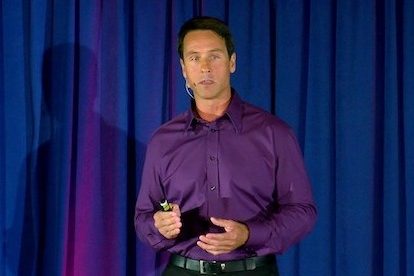
In this TEDx talk Dan Radecki explores the idea that our modern brain can over ride our caveman brain.

Improve team performance through psychological safety
Harness the power of neuroscience and build a psychologically safe culture where people thrive, connect, and perform at their best.

Overcoming pandemic panic
Learn about your brain's operating principles, its natural response to uncertainty and unpredictability and some scientifically proven strategies to better manage stress and emotions, and boost your brain health and resilience.

Build trust and belonging – connection through vulnerability
Learn how to leverage neuroscience to effectively build trust and belonging like Herman Miller who has embedded the concept of psychological safety to cultivate connection across their business.

Enhancing diversity, inclusion & belonging
Learn why traditional diversity training is ineffective and why both visible and invisible diversity are critical to building inclusion and belonging.

Building mental and physical wellness & resilience
Understand the brain-based strategies to mitigate the negative impact of stress and build mental and physical health and resilience.

Resilience training that can change the brain
Understand the latest research on behavioral and cognitive strategies that cultivate resilience and change the brain.

The science behind training effectiveness
Science gives us insights into how humans work so we can avoid training pitfalls while creating new and innovative ways to help people develop to their full potential.
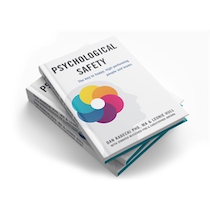
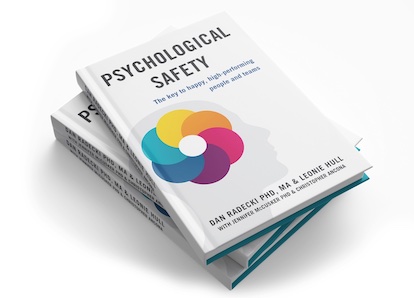
Both academic and industry research identify Psychological Safety as the number one determining factor of successful people and teams. However, until recently we lacked the ability to measure, track or implement strategies for something so intangible and subjective. Thanks to neuroscience research we are now gaining this visibility. This book translates the research to provide valuable insights into the brain – the importance and impact of psychological safety and the strategies to protect and build it personally and collectively.
Learn More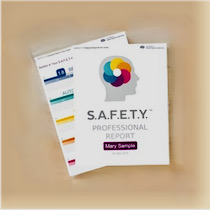
The S.A.F.E.T.Y.™ Model describes six domains of threat or reward that are important to the brain: Security, Autonomy, Fairness, Esteem, Trust and You. Understanding the needs, rewards, motivations, biases and stress triggers of each domain can provide valuable insights into yourself and others and help improve interactions, teamwork and productivity. The S.A.F.E.T.Y.™ assessment ranks and quantifies your brain’s S.A.F.E.T.Y.™ needs and explores the potential impacts of your profile on you and those around you.
Learn More