You’ve probably seen the headlines. AI coaching tools promise to revolutionize leadership development. They offer 24/7 availability, instant feedback, and data-driven insights at a fraction of the cost of human coaches. Some platforms claim they can even detect emotional states through voice analysis or predict team dynamics through sentiment tracking.
Impressive? Absolutely.
A replacement for building genuine psychological safety? Not even close.
Here’s the uncomfortable truth: AI can analyze patterns, but it cannot create the conditions where people feel genuinely safe to be themselves. It can suggest responses to conflict, but it can’t model vulnerability. It can track engagement metrics, but it can’t build trust through shared human experience.
And if your team culture already lacks psychological safety, adding AI coaching tools might actually make things worse.
The Illusion of Connection
A hot take on AI coaching tools and the irreplaceable value of genuine psychological safety
Let me paint a picture. Sarah, a mid-level manager, receives a notification from her company’s new AI coaching platform. It’s detected that her team’s communication patterns suggest “potential disengagement.” The AI recommends she schedule one-on-ones and provides scripted questions to ask.
Sarah follows the script. Her team members give polite, surface-level answers. The AI marks the intervention as “complete.” The dashboard shows green checkmarks.
But nothing has actually changed.
Why? Because Sarah’s team doesn’t lack structured conversations. They lack the felt sense that it’s safe to tell Sarah what’s really going on. They need to know that admitting struggle won’t be held against them, that asking for help won’t signal incompetence, that disagreeing won’t damage their standing.
That kind of safety isn’t built through algorithms. It’s built through repeated human interactions where leaders demonstrate, through their own behavior, that vulnerability is not only accepted but valued.
What AI Misses: The Neuroscience of Safety
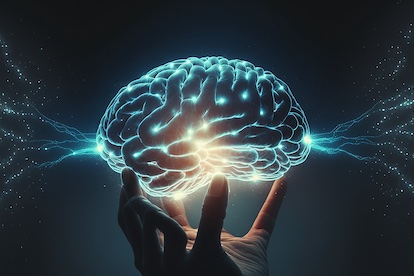
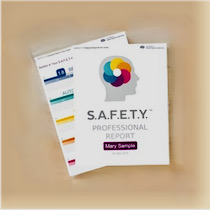
At ABL, our S.A.F.E.T.Y.™ framework is grounded in decades of neuroscience research. We know that psychological safety isn’t just a nice-to-have cultural feature. It’s a neurobiological necessity for high performance and innovation.
The framework identifies six core drivers that our brains need to function optimally:
- Security: The need for certainty,
- predictability, and consistency
- Autonomy: The need for a sense of choice and control over our lives
- Fairness: The need for equitable treatment and transparent processes
- Esteem: The need to feel valued and respected
- Trust: The need to belong to a trusted group and experience reliable relationships with those ‘like us
- You: The unique factors that shape our individual experience
When these needs go unmet, our brains shift into threat mode. The amygdala takes over. Creativity shuts down. Collaboration becomes difficult. Performance suffers.
AI tools can measure some symptoms of these unmet needs such as declining engagement scores, increased turnover, reduced communication frequency– all lagging indicators of a problem when it’s too late. However, AI can’t address the root cause because it cannot provide the genuine human connection that the human brain fundamentally requires, nor can it predict, perceive, or contribute to a human’s response to their ‘human’ social experiences and interactions.
When you connect with a person, on a real level your brain might release oxytocin—the neurochemical associated with bonding and trust. Oxytocin is implicated in pair bonding, parental behavior, affiliation, and some forms of trust.
It’s quite different when an algorithm validates your feelings.
While an AI Chat Bot’s algorithmically delivered digital feedback or affirming responses can, indeed, engage reward-related brain regions, actual reciprocal human relationships are a particularly robust source of belonging and support that still cannot be matched by tech.
Where AI Falls Short on Each S.A.F.E.T.Y.™ Driver
Let’s break this down further.
Security Security requires more than risk assessments and compliance tracking. People feel secure when they experience predictable patterns, consistent processes, and clear information during uncertain times. When a team member asks about a change, they need detailed explanations, advance notice, and assurance that core systems will remain stable. AI can provide information, but it can’t create the felt sense of environmental stability and predictability that comes from a leader who maintains consistent routines, follows through on commitments, and minimizes disruptive surprises.
Autonomy isn’t just about being consulted—it’s about having genuine control and choice over your work and matters that impact you and your life. When a leader gives you decision-making authority over how you accomplish your goals, you feel your autonomy honored. AI might offer options, but it can’t grant the real authority and control that makes autonomy meaningful.
Fairness depends on transparency and the ability to explain the “why” behind decisions in ways that account for context and nuance. AI can apply rules consistently, but fairness often requires understanding the human story behind the situation. It requires judgment calls that balance competing values, something humans excel at and machines struggle with.
Esteem is built through recognition that feels personal and specific. Generic praise generated by an algorithm doesn’t land the same way as a leader who notices the particular way you solved a problem or the unique strength and value you brought to a project. Your brain knows the difference between authentic appreciation and automated praise and acknowledgment.
Trust develops through belonging to a group where we feel an ‘in-group’ connection —where we’re recognized as part of the tribe. AI can facilitate connections, but it can’t create the felt sense of tribal belonging that comes from being recognized as ‘one of us’ by other humans who share our identity, values, or experiences.
You—each person’s unique background, personality, culture, and triggers shape how they experience Security, Autonomy, Fairness, Esteem, and Trust. AI might personalize responses based on data, but it can’t truly understand the complex interplay of someone’s life story, cultural context, and personal history that determines what makes them feel psychologically safe.
The Real Risk of Human–Robot Interactions (HRI)
Human–human interactions (HHI) and human–robot interactions (HRI)
Here’s where things get concerning. Organizations struggling with psychological safety often look for quick fixes. AI coaching tools can seem like an efficient solution. They are scalable, measurable, and cost-effective. Yet deploying these tools in a psychologically unsafe culture can backfire in several ways, such as:
False sense of progress: Leadership sees adoption metrics and completion rates, assuming the problem is being addressed. Meanwhile, team members go through the motions without experiencing any real shift in how safe they feel.
Increased surveillance anxiety: AI tools that monitor communication patterns, sentiment, or productivity can heighten feelings of being watched and judged. For team members who already don’t feel safe, this amplifies their Security, Autonomy, Fairness, Esteem, and Trust concerns.
Depersonalization of support: When people reach out for help and receive algorithmic responses, it can reinforce the feeling that they’re just data points rather than valued individuals. This directly undermines their Esteem and Trust.
Erosion of Trust: If AI tools make recommendations that leaders follow without genuine understanding or adaptation, it becomes obvious that the leader is outsourcing their judgment. This damages Trust in leadership.
Authenticity gap: Perhaps most damaging, AI tools can create a veneer of care without the substance. Team members can tell when responses are scripted or when check-ins are prompted by software rather than genuine interest or concern. This gap between appearance and reality corrodes the foundation of psychological safety.
What AI Can Do (And What Humans Must Do)
This isn’t an anti-technology argument. AI has legitimate value in leadership development and team management.
AI excels at:
- Identifying patterns in large datasets that humans might miss
- Providing just-in-time learning resources
- Offering practice scenarios for skill development
- Tracking progress on measurable behaviors
- Reducing administrative burden so leaders have more time for people
These are useful capabilities. But they’re support tools, not replacements for human leadership.
Building psychological safety requires humans to:
- Model vulnerability and authenticity
- Respond to emotional nuance with empathy
- Make judgment calls that balance competing values
- Build trust through consistent, reliable presence
- Create the felt sense of being seen and valued
- Navigate complex interpersonal dynamics
- Demonstrate that it’s safe to speak up, take risks and make mistakes
These capabilities emerge from our shared humanity. They require emotional intelligence, social awareness, and the willingness to be present with discomfort. Qualities that remain distinctly human.
A Better Approach: Human-Centered, Tech-Supported
The most effective path forward combines human wisdom with technological support.
Start with the human foundation. Before they can create safety for others, leaders need to understand their own S.A.F.E.T.Y.™ drivers, what their brain needs, how it is triggered, and how their S.A.F.E.T.Y.™ sensitivities may impact themselves and those they lead. This self-awareness comes through reflection, feedback from other humans, and the sometimes uncomfortable work of examining our own biases and blind spots.
Once leaders have built this foundation, they can use AI tools strategically:
- To surface data that prompts important conversations
- To provide reminders and structure for consistent practices
- To offer learning resources that deepen understanding
- To track whether behavioral changes are occurring over time
But the actual work of building psychological safety: the conversations, the vulnerability, the connection, the trust-building, remains human work.
The Path Forward for Leaders Like You
If you’re a team leader reading this, you might feel the pressure to adopt the latest tools while also sensing that something essential is missing from your team culture. You’re not wrong.
Your team doesn’t need more technology. They need more of you. The real, imperfect, trying-your-best you.
They need you to:
- Ask how they’re really doing and wait for the honest answer
- Admit when you don’t know something
- Respond to mistakes with curiosity instead of judgment
- Notice what’s unique and valuable about each person’s contributions
- Follow through on commitments, especially small ones
- Show up consistently, even when it’s uncomfortable
This is harder than implementing an AI tool. It requires ongoing effort, self-reflection, and the courage to be genuinely present with your team.
But this is also where the real transformation happens. When you create genuine psychological safety, you unlock your team’s full potential. People bring their best thinking, take smart risks, collaborate across differences, and stay engaged even when work gets challenging.
No algorithm can create that. Only humans can.
The Bottom Line
AI coaching tools have their place in the modern workplace. They can support learning, provide structure, and offer useful data. But they cannot, and should not, replace the human work of building psychological safety.
Your team’s brains are wired to seek connection with other humans. They need to feel seen, valued, and safe in ways that only genuine human interaction can provide. The S.A.F.E.T.Y.™ drivers aren’t just abstract concepts; they’re neurobiological requirements for optimal functioning.
Before you invest in the next AI solution, ask yourself: Have we built the human foundation? Do our leaders understand their own psychological safety needs? Can they recognize and respond to these needs in others? Are we creating the conditions where people feel genuinely safe to be themselves?
If the answer is no, no amount of artificial intelligence will fix that. But if you’re willing to do the human work. The messy, uncomfortable, deeply rewarding work of building real psychological safety. You’ll create something no algorithm can replicate: a team where people thrive.
Ready to Build Real Psychological Safety?
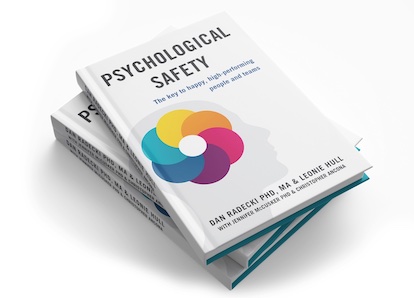
At ABL, we help leaders develop the self-awareness and skills needed to create genuinely psychologically safe teams. Our approach is grounded in neuroscience and focused on the human capabilities that make great leadership possible.
Explore our resources:
Because building psychological safety isn’t about finding the right tool. It’s about becoming the right kind of leader.
Citations
Burenkova OV, Dolgorukova TA, An I, Kustova TA, Podturkin AA, Shurdova EM, Talantseva OI, Zhukova MA, Grigorenko EL. Endogenous oxytocin and human social interactions: A systematic review and meta-analysis. Psychol Bull. 2023 Sep-Oct;149(9-10):549-579. doi: 10.1037/bul0000402. PMID: 38713749; PMCID: PMC11077008.
Carter CS. Oxytocin and love: Myths, metaphors and mysteries. Compr Psychoneuroendocrinol. 2021 Dec 27;9:100107. doi: 10.1016/j.cpnec.2021.100107. PMID: 35755926; PMCID: PMC9216351.
Delgado MR, Fareri DS, Chang LJ. Characterizing the mechanisms of social connection. Neuron. 2023 Dec 20;111(24):3911-3925. doi: 10.1016/j.neuron.2023.09.012. Epub 2023 Oct 6. PMID: 37804834; PMCID: PMC10842352.
De Castro Martins C, Chaminade T, Cavazza M. Causal Analysis of Activity in Social Brain Areas During Human-Agent Conversation. Front Neuroergon. 2022 May 17;3:843005. doi: 10.3389/fnrgo.2022.843005. PMID: 38235459; PMCID: PMC10790851.
Fang CM, Liu AR, Danry V, Lee E, Chan SWT, Pataranutaporn P, Maes P, Phang J, Lampe M, Ahmad L, Agarwal S. How AI and human behaviors shape psychosocial effects of chatbot use: a longitudinal randomized controlled study. arXiv [Preprint]. 2025 Mar 21. Available from: https://arxiv.org/abs/2503.17473
Spatola, N., Chaminade, T. Precuneus brain response changes differently during human–robot and human–human dyadic social interaction. Sci Rep 12, 14794 (2022). https://doi.org/10.1038/s41598-022-14207-9
FAQs
Can AI coaching replace a human leadership coach?
No, AI coaching cannot replace a human leadership coach, particularly when it comes to building psychological safety. While AI tools offer valuable support—like providing 24/7 access to resources, tracking behavioral patterns, and offering structured learning modules—they lack the essential human elements that create genuine transformation.
Human coaches bring irreplaceable capabilities: they model vulnerability, respond to emotional nuance with empathy, build trust through consistent presence, and create the felt sense of being truly seen and understood. Your brain releases oxytocin—the neurochemical associated with bonding and trust—when another person authentically connects with you, not when an algorithm validates your feelings.
AI excels as a support tool for leadership development. It can identify patterns in communication data, provide just-in-time learning resources, offer practice scenarios, and reduce administrative tasks so leaders have more time for meaningful human interaction. Think of AI as a powerful assistant that handles logistics and information processing, freeing human coaches to focus on the relational and emotional work that drives real change.
The most effective approach combines both: human coaches who understand the neuroscience of psychological safety, supported by AI tools that enhance efficiency and provide useful data. But the core work of leadership development—building self-awareness, navigating complex interpersonal dynamics, and creating environments where people feel safe to be authentic—remains distinctly human work.
What are the six S.A.F.E.T.Y.™ drivers?
The S.A.F.E.T.Y.™ framework, developed by the Academy of Brain-based Leadership, identifies six neurobiological drivers that our brains require to feel psychologically safe and perform optimally. These aren’t just workplace preferences—they’re fundamental needs rooted in how our brains are wired:
Security is the need for certainty, predictability, and consistency—protection from excessive change and uncertainty. When people feel secure, they can focus on creative problem-solving rather than self-protection. Leaders build Security by providing clear communication during change, ensuring there is role clarity and direction, responding consistently to questions and concerns, and creating predictable environments where people know what to expect.
Autonomy represents our need for choice, control, and influence over our work. People need to feel they have agency in decisions that affect them. Leaders nurture Autonomy by involving team members in planning, respecting their expertise, and allowing flexibility in how work gets done—even when the ultimate decision rests with leadership.
Fairness is our need for equitable treatment, transparent processes, and just outcomes. Our brains are exquisitely sensitive to fairness violations. Leaders demonstrate Fairness by explaining the reasoning behind decisions, applying standards consistently, and ensuring that processes are accessible and understandable to everyone.
Esteem reflects our need to feel valued, respected, and appreciated for our unique contributions. This goes beyond generic praise—people need recognition that feels personal and specific. Leaders build Esteem by noticing individual strengths, acknowledging effort and growth, and treating people with dignity regardless of their position.
Trust is the need to belong to and feel accepted by our “in-group”—to be recognized as part of the tribe. Our brains are wired to distinguish between “us” and “them,” and we feel psychologically safe when we’re clearly part of the “us.” Leaders build Trust by creating inclusive team identities, bridging in-group/out-group divides, finding common ground across differences, and ensuring that all team members feel they genuinely belong rather than being tolerated outsiders.
You represents shape how each individual experiences the other five domains—including personality profile, cultural background, personal history, biases, and triggers. What makes one person feel secure might differ from what another needs; what feels fair to one person might feel unfair to another based on their context. Leaders account for “You” by recognizing that psychological safety isn’t one-size-fits-all, learning what matters most to each team member, and adapting their approach to honor individual differences rather than assuming everyone experiences Security, Autonomy, Fairness, Esteem, and Trust the same way.
When these six drivers are met, people’s brains shift out of threat mode. The prefrontal cortex—responsible for complex thinking, creativity, and collaboration—can function optimally. When these needs go unmet, the amygdala takes over, triggering stress responses that undermine performance, wellbeing, and connection.
.
Why can’t AI build psychological safety?
AI cannot build psychological safety because psychological safety is fundamentally a neurobiological response to genuine human connection—and AI, no matter how sophisticated, cannot provide that connection.
Here’s what the neuroscience tells us: When you interact with another person who demonstrates authentic care, understanding, and presence, your brain releases neurochemicals like oxytocin that create feelings of safety and bonding. Your nervous system regulates through co-regulation with another human nervous system. These are biological processes that require human-to-human interaction. An algorithm, no matter how well-designed, cannot trigger these responses in the same way.
Each of the six S.A.F.E.T.Y.™ drivers requires human capabilities that AI lacks. Security isn’t just about providing information—it’s about the embodied presence of a leader who remains calm and caring during uncertainty. Autonomy isn’t just offering choices—it’s respecting someone’s agency in a way that honors their humanity. Fairness requires judgment calls that balance competing values and account for human context. Esteem needs status and recognition that feels genuinely personal. Trust develops through belonging and vulnerability, which requires the belief that another person will handle your openness with care. And authenticity (You) requires seeing others share their unique human condition, model realness and being accepted for who you are.
AI can measure symptoms of psychological unsafety—declining engagement scores, communication pattern changes, increased turnover—but it cannot address the root causes. It can suggest interventions, but it cannot provide the warm, consistent human presence and interpersonal connection that makes those interventions effective.
There’s another risk: deploying AI coaching tools in already psychologically unsafe cultures can actually make things worse. Team members may experience increased surveillance anxiety, feel depersonalized when receiving algorithmic responses to genuine concerns, or recognize the gap between automated care and authentic concern—all of which further erodes psychological safety.
AI has legitimate value as a support tool. It can surface useful data, provide learning resources, track behavioral changes over time, and free up leaders’ time for more meaningful human interaction. But the actual work of building psychological safety—the vulnerability, the empathy, the trust-building through repeated caring interactions—remains human work. Your team’s brains are wired to seek connection with other humans, and no technology can replace that fundamental need.
Want to learn more about building genuine psychological safety in your organization?
Explore ABL’s S.A.F.E.T.Y.™ Assessment, accreditation programs, and resources designed to help leaders create the human connections that drive high performance. Visit brainleadership.com or contact our team to discuss how we can support your leadership development journey.