The Biology of Being Present: What Heart Rate Synchrony Reveals About Leadership

We often describe meaningful interactions as “connection,” “presence,” or “rapport.” But emerging neuroscience suggests these experiences may be more than subjective feelings — they may be reflected in our biology.
A study published in PNAS Nexus in June 2026 provides compelling evidence that when people are physically together and genuinely engaged with one another, their bodies begin to synchronize in measurable ways. Researchers working out of the Technical University of Denmark found that people’s heart rates naturally rise and fall in similar patterns when they are socially engaged with one another.
This doesn’t mean two hearts literally beat in unison, beat for beat. What the researchers measured is something subtler and, in some ways, more interesting: the slow, minute-to-minute ebb and flow of heart rate — the rises and dips that track our shifting states of arousal and engagement — tends to move in the same direction across people who are genuinely connected in the moment. Statisticians call this inter-subject correlation of heart rate, or ISC-HR. Think of it less like a metronome and more like two boats riding the same swell.
A Closer Look at the Study
What sets this research apart is where it happened. Most prior synchrony research has come from controlled laboratory settings or single high-arousal events, such as a haunted house or a fire-walking ritual. This study instead followed 72 students (mostly engineering students, ages 19 to 32) across three separate four-day trips to New York City, part of an annual audio-engineering competition. Rather than constraining behavior to a lab, the researchers let real life happen and simply measured what unfolded.
Each participant wore a Garmin wristband to continuously track heart rate, a hearing aid microphone clipped to their collar to capture the sound environment around them, and a smartphone to log GPS location. Data streamed in from roughly 9:00 a.m. to 10:00 p.m. each day across the trip, generating well over a thousand hours of combined physiological, spatial, and acoustic data. The researchers then broke the heart rate signal into five-minute windows and statistically compared real, time-aligned synchrony against a “shuffled” control — heart rate segments that were randomly paired and therefore should show no meaningful relationship. Any synchrony beyond that baseline reflects something real happening between people, not coincidence. What they found was fascinating:
1. Proximity matters — a lot
Heart rate synchrony increased significantly when people were within about 20 meters of one another, and the effect held up across all three trips with what researchers call large effect sizes — a way of saying the difference wasn’t small or borderline, but a substantial, reliable pattern. At the level of whole groups together in a space, the effect was especially strong; at the level of individual pairs, it was more modest but still consistently present in two of the three trips. Being more than a kilometer apart looked statistically no different from random chance — in other words, distance doesn’t gradually fade the effect so much as the effect mostly requires real physical closeness.
2. Shared attention strengthens connection
The researchers sorted activities into three types: close, face-to-face interaction (like group discussions or games), joint attention to a shared stimulus (like a lecture or presentation), and dispersed interaction (like a reception where people were physically present but scattered and only loosely engaged with one another). Synchrony was strongest during face-to-face interaction, still clearly present during shared-attention moments, and essentially absent during dispersed mingling. A rooftop reception where people drifted in and out of brief conversations produced no measurable synchrony at all, even though everyone was technically “together.” Mere co-location wasn’t enough; what mattered was whether attention was actually shared.
3. Relationships matter
Even after controlling for physical proximity — comparing people who were equally close together — pairs who already knew each other before the trip showed significantly higher synchrony than strangers placed in the same setting. This is a meaningful detail: it means familiarity adds something on top of simple shared space and shared stimulus. Existing trust and rapport appear to do real physiological work.
4. Noise disrupts connection
Using the hearing-aid microphones, researchers measured both how loud an environment was (sound pressure level) and how clear speech was relative to background noise (signal-to-noise ratio). The relationship was more nuanced than “noise is always bad”: in quiet settings, synchrony was actually highest when there was a moderate amount of clarity in the signal, not the absolute maximum. But once the overall environment got loud, synchrony dropped across the board, settling to levels similar to those seen in dispersed, low-engagement interactions — regardless of how clear the conversation itself was. In other words, loud rooms seem to flatten connection no matter how good the acoustics otherwise are. The researchers’ interpretation lines up with what we know about cognitive load: when the brain has to work harder to separate speech from background noise, it has fewer resources left for reading faces, tracking tone, and staying attuned to another person.
Where This Fits in the Bigger Picture
This study didn’t emerge from nowhere. A growing body of research has documented interpersonal physiological synchrony in other settings: heart rates align between mothers and infants during face-to-face interaction, between romantic partners, among choir singers, and even between spectators and performers during high-arousal rituals like fire-walking. What makes the New York study distinct is that it captured this phenomenon outside the lab, across ordinary, lower-intensity, multi-day social life, and ruled out a simple alternative explanation: that synchrony was just a byproduct of everyone’s heart rate generally rising and falling together (say, from physical exertion or the excitement of city life). The researchers checked for this directly and found no meaningful relationship between average heart rate and the degree of synchrony — the alignment tracked something more specific than generic arousal.
One of the most interesting findings from the study is that simply being near someone isn’t enough. The strongest synchrony occurred when participants focused on the same external event — listening to the same presentation, working through the same problem together, or sharing the same experience. This has direct implications for:
- Team meetings
- Strategy sessions
- Important conversations
- Group gatherings
- Professional development programs
The quality of shared attention may matter as much as the content being discussed. Two people staring at their own laptops in the same conference room, each half-listening to a meeting, are physically co-located but may be doing very little of the physiological work that builds trust.
The study also found that people with established relationships demonstrated greater physiological synchrony, even holding proximity constant. Trust appears to extend beyond emotions and behaviors — it may influence how our nervous systems respond to one another. Trust allows people to devote less energy to uncertainty and more energy to collaboration.
One of the most practical findings involved noise. When participants were surrounded by loud, complex listening environments, synchrony decreased. The explanation is straightforward: the brain has limited cognitive resources, and in noisy settings those resources are redirected toward separating speech from background sound, leaving fewer available for reading facial expressions, interpreting tone of voice, and responding to subtle interpersonal cues. So it’s worth asking: are we creating environments that promote connection — or environments that compete with it?
Conference rooms with constant interruptions, noisy restaurants, multitasking during virtual meetings, and continuous digital distractions may all reduce the very connection we’re trying to build. From this information we can extrapolate some behavioral best practices:
- Eliminate distractions during important conversations — phones away, notifications off, full attention on the moment.
- Design meetings around a clear, shared focus rather than competing agendas; a room full of people quietly multitasking is not, physiologically speaking, “together.”
- Create environments that support attentive listening — quieter rooms, fewer overlapping conversations, better acoustics where possible.
- Invest time in relationship building before expecting peak performance; familiarity appears to lay physiological groundwork that proximity alone cannot.
- Recognize that presence is not simply a communication skill — it is a physiological state that influences everyone in the room.
- Where possible, favor shared, synchronous experiences (a joint working session, a live discussion) over parallel, disconnected ones (everyone silently reading the same document).
Although much more research is needed, one message is already clear: meaningful connection requires more than good intentions. It emerges from shared attention, psychological safety, and relationships that allow people to align — not only intellectually and emotionally, but physiologically as well. When people truly connect, it appears their nervous systems begin to tell the same story.
Reference
He, H., Christensen, J. H., Sørensen, A. J. M., & Konvalinka, I. (2026). Heart rate synchrony as a marker of real-world social engagement. PNAS Nexus, 5(6), pgag181. https://doi.org/10.1093/pnasnexus/pgag181
Trending

Psychological Safety Book
May 30, 2018Related
AI Can’t Fix a Psychologically Unsafe Culture at Work
October 5, 2026AI and the Brain: Answering the Questions Everyone’s Asking
September 7, 2026Share Post


TEDx: The struggle between the emotional and logical brain
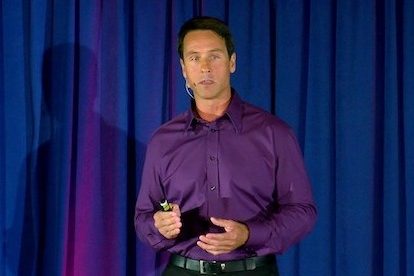
In this TEDx talk Dan Radecki explores the idea that our modern brain can over ride our caveman brain.

Improve team performance through psychological safety
Harness the power of neuroscience and build a psychologically safe culture where people thrive, connect, and perform at their best.

Overcoming pandemic panic
Learn about your brain's operating principles, its natural response to uncertainty and unpredictability and some scientifically proven strategies to better manage stress and emotions, and boost your brain health and resilience.

Build trust and belonging – connection through vulnerability
Learn how to leverage neuroscience to effectively build trust and belonging like Herman Miller who has embedded the concept of psychological safety to cultivate connection across their business.
Enhancing diversity, inclusion & belonging
Learn why traditional diversity training is ineffective and why both visible and invisible diversity are critical to building inclusion and belonging.

Building mental and physical wellness & resilience
Understand the brain-based strategies to mitigate the negative impact of stress and build mental and physical health and resilience.

Resilience training that can change the brain
Understand the latest research on behavioral and cognitive strategies that cultivate resilience and change the brain.

The science behind training effectiveness
Science gives us insights into how humans work so we can avoid training pitfalls while creating new and innovative ways to help people develop to their full potential.
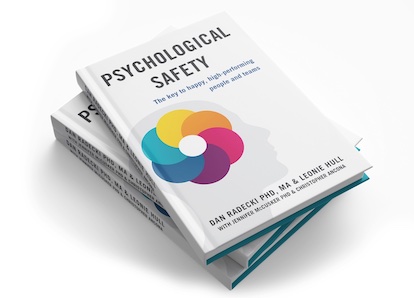
Both academic and industry research identify Psychological Safety as the number one determining factor of successful people and teams. However, until recently we lacked the ability to measure, track or implement strategies for something so intangible and subjective. Thanks to neuroscience research we are now gaining this visibility. This book translates the research to provide valuable insights into the brain – the importance and impact of psychological safety and the strategies to protect and build it personally and collectively.
Learn More
The S.A.F.E.T.Y.™ Model describes six domains of threat or reward that are important to the brain: Security, Autonomy, Fairness, Esteem, Trust and You. Understanding the needs, rewards, motivations, biases and stress triggers of each domain can provide valuable insights into yourself and others and help improve interactions, teamwork and productivity. The S.A.F.E.T.Y.™ assessment ranks and quantifies your brain’s S.A.F.E.T.Y.™ needs and explores the potential impacts of your profile on you and those around you.
Learn More