Psychological safety as a team climate isn’t itself a legal term. Managing psychosocial hazards is. In practice, building psychological safety helps organizations meet their psychosocial obligations, because hazards are reported and addressed earlier.
Psychosocial Safety in the Context of Workplace Health & Safety

In most organizations, two conversations are happening in two different rooms.
In one, HR and People & Culture are talking about psychological safety: whether people feel able to speak up, admit mistakes, challenge ideas and ask for help. In the other, health and safety professionals are dedicated to identifying hazards. Some of those are psychosocial hazards: the parts of work design, management, and relationships that can cause psychological or physical harm. More and more, employers are being tasked with identifying and controlling psychosocial hazards to mitigate operational and legal risks. Safe Work Australia. (2022). Model Code of Practice: Managing psychosocial hazards at work. Safe Work Australia.
Yet, who is responsible? The owners, budgets, and reporting lines usually aren’t clear. And that gap is where risk hides.
A neuroscience-based approach to psychosocial risk management lets HR and Health and Safety Professionals work from the same playbook. This is what ABL has to offer.
Understanding the Context
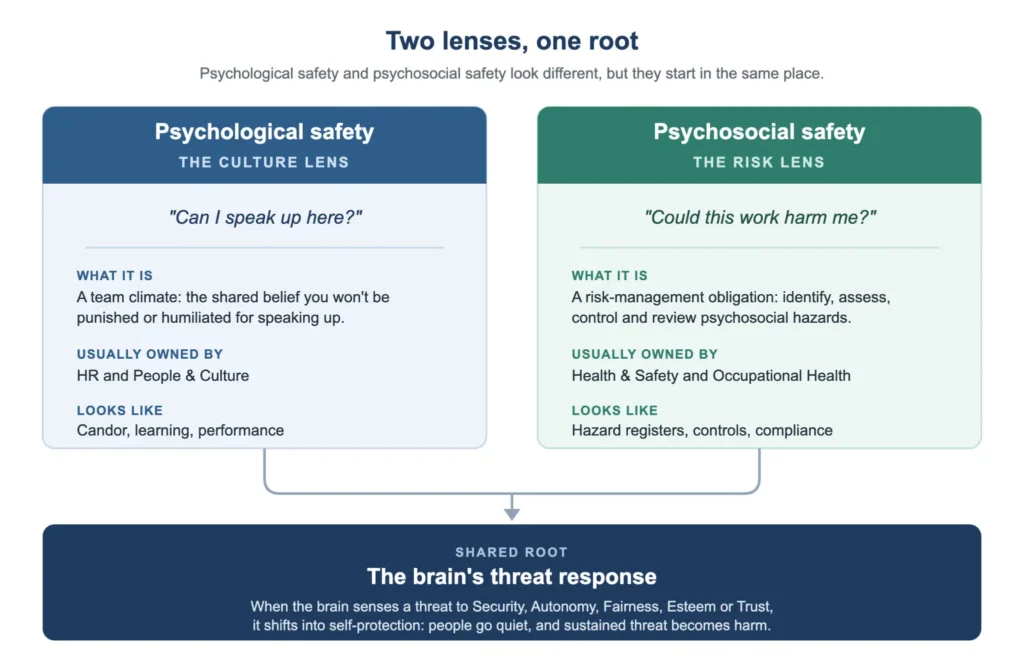
- Psychological safety is a team climate. It’s the shared belief that you won’t be punished or humiliated for speaking up with ideas, questions, concerns or mistakes. It’s a culture and performance concept.
- Psychosocial safety is a risk-management obligation. It’s about identifying psychosocial hazards (such as high job demands, poor support, bullying or poor organizational justice), assessing the risk, and putting controls in place so far as is reasonably practicable, as you would for any other workplace hazard.
- They’re connected through the brain. Both describe how people respond to social threats. When the brain detects a threat to things like certainty, control, fairness, status or belonging, it shifts into self-protection. That shift is what makes people go quiet (low psychological safety), and, sustained over time, it’s what turns a psychosocial hazard into psychological harm.
What is psychological safety?
“Teams with psychological safety share a belief… that they will not be punished or humiliated for speaking up with ideas, questions, concerns or mistakes, and that the team is safe for interpersonal risk taking” – Amy Edmondson, PhD.
From a neuroscience perspective, Psychological Safety is the state where the brain’s need for security, autonomy, fairness, esteem and trust are met in a social environment.
It matters because it’s one of the strongest predictors of team learning and performance. Google’s Project Aristotle, which studied hundreds of its own teams, found psychological safety was the most important factor separating its highest-performing teams from the rest.
But psychological safety is often misread as “being nice” or “keeping everyone comfortable”. It isn’t. Psychologically safe teams are frequently more challenging places to work, because candour is expected. What’s removed is the fear of personal consequences for being candid.
What is psychosocial safety?
Psychosocial safety comes from the world of work health and safety. In Australia, Health and Safety professionals laws require persons conducting a business or undertaking (PCBUs) to manage psychosocial risks the same way they manage physical risks: identify hazards, assess risk, control it, and review controls. Safe Work Australia’s Model Code of Practice: Managing psychosocial hazards at work sets out the common hazards, including:
- Job demands that are too high or too low
- Low job control
- Poor support from supervisors or colleagues
- Lack of role clarity
- Poor organizational change management
- Inadequate reward and recognition
- Poor organizational justice
- Traumatic events or material
- Remote or isolated work
- Poor physical environment
- Violence and aggression
- Bullying
- Harassment, including sexual and gender-based harassment
- Conflict or poor workplace relationships
Internationally, ISO 45003 gives similar guidance for managing psychological health and safety within an occupational health and safety management system.
The key point for leaders: psychosocial safety is not optional, and it’s not just a wellbeing initiative. It’s a duty, and regulators increasingly expect to see evidence of how hazards are being identified and controlled.
Why the difference matters
When organizations treat these as separate topics, three things tend to happen.
- Compliance without culture. Health and Safety professionals teams build a psychosocial risk register, run a survey and update policies. All necessary. But if people don’t feel safe to tell the truth, the survey under-reports, consultation is polite rather than honest, and hazards stay hidden until they surface as a complaint, a resignation or a claim.
- Culture without controls. HR runs psychological safety workshops and wellbeing programs. Also valuable. But if workloads, rosters, role clarity and change processes stay the same, the hazards remain. Training people to feel safe in an unsafe system doesn’t hold.
- Nobody owns the gap. When a psychological injury claim lands, HR and Health and Safety professionals often discover they were each seeing part of the picture. Neither had the whole story early enough to act.
The organizations that get this right treat psychological safety as the early-warning system for psychosocial risk, and psychosocial risk management as the structure that turns what they hear into action.
The missing link: how the brain processes social threat
Neuroscience explains why these two ideas belong together.
The human brain is constantly, and mostly nonconsciously, scanning for threat and reward. It doesn’t only respond to physical danger. It responds just as strongly to social signals: a public put-down, an unfair decision, a sudden restructure, being left out of a meeting. Research suggests social pain and physical pain share overlapping neural pathways, which is why a harsh comment can feel like a blow.
When the brain detects social threat, it does what it’s built to do. It narrows attention, prioritises self-protection, and reduces the risky behaviour of speaking up. Short term, that’s psychological safety dropping. Long term, chronic threat keeps the stress response switched on, which is linked to burnout, anxiety, poorer physical health, more time off work and, eventually, employee turnover.
Put simply: a psychosocial hazard is anything at work that keeps a person’s brain in sustained threat. Psychological safety is what it feels like when those threats are low enough for people to speak, learn and perform.
The S.A.F.E.T.Y.™ model: one framework for both rooms
The Academy of Brain-based Leadership (ABL) developed the S.A.F.E.T.Y.™ model, drawing on two decades of neuroscience research, to make these social threats visible and measurable. It identifies six domains the brain is continually tracking:
| Domain |
What the brain is tracking |
Where it shows up as a hazard |
|---|---|---|
| Security | Predictability and certainty | Poor change management, lack of role clarity and unclear expectations |
| Autonomy | A sense of choice and control | Low job control and micromanagement |
| Fairness | Equitable and just treatment and transparency | Inconsistent process, poor organizational justice, lack of opportunity to contribute, and unfair decisions |
| Esteem | Status, respect and recognition | Inadequate recognition, feeling undervalued or judged |
| Trust | Social need to belong | Isolation and exclusion |
| You | Unique personal context | One-size-fits-all approaches that miss individual triggers |
Because the same drivers sit underneath both team climate and psychosocial hazards, the model gives HR and Health and Safety professionals a shared language. A Health and Safety professionals manager looking at “poor organizational justice” and an HR leader worried about “people not speaking up” may be looking at the same Fairness threat from two angles.
What this looks like in practice
For HR and People & Culture
- Move from measuring sentiment to measuring the drivers of threat and reward.
- Use individual S.A.F.E.T.Y.™ profiles so leaders understand that what threatens one person (say, loss of Autonomy) may barely register for another, who is more sensitive to Fairness.
- Build leader capability in small, repeatable behaviours and specific data relating to their team, rather than one-off workshops.
For Compliance Officers, Health and Safety professionals, and Occupational Health
- Treat low psychological safety as a leading indicator: if teams won’t speak up, your hazard data is incomplete.
- Use S.A.F.E.T.Y.™ diagnostics, like the team level PS Pulse™, alongside surveys and incident data to find hotspots earlier.
- The PS Pulse™ is an anonymous diagnostic that pinpoints the human S.A.F.E.T.Y.™ driver being threatened in a team, so controls address the cause, not just the symptom. Utilize the diagnostic over time to review changes and improvements, to ensure controls are current.
Together
- Agree one shared set of team-level measures.
- Map hazards on the risk register to S.A.F.E.T.Y.™ domains.
- Review progress together, with evidence you can show leadership, the board and, if needed, the regulator.
How ABL supports HR and occupational health teams
ABL’s corporate offerings are designed to fit this diagnose → intervene → monitor cycle:
- S.A.F.E.T.Y.™ Assessment — a validated self-diagnostic (about 15 minutes) that shows which social drivers matter most to each person and how they experience threat and reward.
- PS Pulse™ — an anonymous team diagnostic that surfaces where psychological safety is under strain and which drivers are involved.
- Individual and team S.A.F.E.T.Y.™ debriefs and toolkit — practical sessions that build self-awareness, interpersonal awareness and leader micro-skills.
- ABL SAFETY™ Dashboard — ongoing visibility of team-level trends.
- The S.A.F.E.T.Y.™ System — a framework for embedding the approach across the organization.
ABL works with more than 100 organizations across healthcare, pharmaceuticals, financial services, tech, energy, manufacturing, education, entertainment, fashion and apparel, professional services, food and beverage, consumer staples, transportation, and not for profit sectors.
FAQs
Is psychological safety a legal requirement?
Does a psychological safety program make us compliant with psychosocial regulations?
No program on its own makes you compliant. You still need to identify hazards, assess risks, implement and review controls, and consult with workers. Psychological safety strengthens every one of those steps, especially consultation.
What’s the difference between psychosocial hazards and psychosocial risks?
A hazard is the source of potential harm (for example, unmanageable workloads). Risk is the likelihood and severity of harm resulting from exposure to that hazard, which depends on duration, frequency and severity, and on how hazards interact.
Who should own psychosocial safety — HR or Occupational Health teams?
Both. Health and Safety professionals usually own the risk-management process; HR often owns many of the levers (job design, leadership capability, performance and recognition). The most effective organizations share measures and governance.
Where should we start?
Start by understanding where the threat is. A team-level diagnostic shows which drivers are under strain and where, so you invest in the right controls first.
Take the first step
Find out which of the S.A.F.E.T.Y.™ drivers matters most to you in under 15 minutes. Take the free S.A.F.E.T.Y.™ Assessment
Trending
Psychological Safety Book
May 30, 2018Related
AI Can’t Fix a Psychologically Unsafe Culture at Work
October 5, 2026AI and the Brain: Answering the Questions Everyone’s Asking
September 7, 2026Share Post


July 23, 2015
Videos
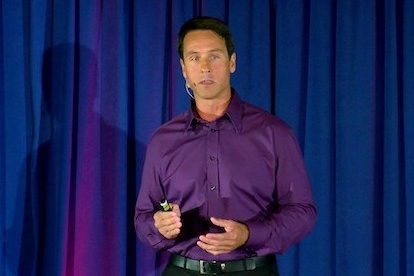
TEDx: The struggle between the emotional and logical brain
In this TEDx talk Dan Radecki explores the idea that our modern brain can over ride our caveman brain.

May 30, 2021
Webinar-on-demand
Improve team performance through psychological safety
Harness the power of neuroscience and build a psychologically safe culture where people thrive, connect, and perform at their best.

March 30, 2020
Webinar-on-demand
Overcoming pandemic panic
Learn about your brain's operating principles, its natural response to uncertainty and unpredictability and some scientifically proven strategies to better manage stress and emotions, and boost your brain health and resilience.

March 1, 2021
Podcasts
Build trust and belonging – connection through vulnerability
Learn how to leverage neuroscience to effectively build trust and belonging like Herman Miller who has embedded the concept of psychological safety to cultivate connection across their business.

June 21, 2021
Webinar-on-demand
Enhancing diversity, inclusion & belonging
Learn why traditional diversity training is ineffective and why both visible and invisible diversity are critical to building inclusion and belonging.

July 31, 2021
Webinar-on-demand
Building mental and physical wellness & resilience
Understand the brain-based strategies to mitigate the negative impact of stress and build mental and physical health and resilience.

March 21, 2018
Publications
Resilience training that can change the brain
Understand the latest research on behavioral and cognitive strategies that cultivate resilience and change the brain.

August 30, 2017
Publications
The science behind training effectiveness
Science gives us insights into how humans work so we can avoid training pitfalls while creating new and innovative ways to help people develop to their full potential.
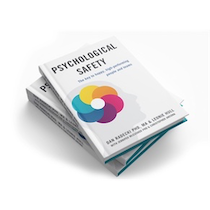
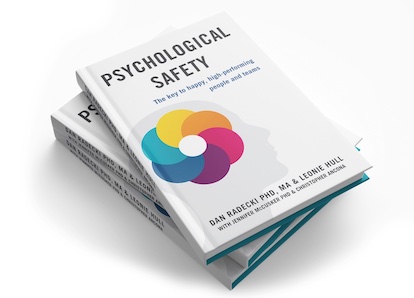
Both academic and industry research identify Psychological Safety as the number one determining factor of successful people and teams. However, until recently we lacked the ability to measure, track or implement strategies for something so intangible and subjective. Thanks to neuroscience research we are now gaining this visibility. This book translates the research to provide valuable insights into the brain – the importance and impact of psychological safety and the strategies to protect and build it personally and collectively.
Learn More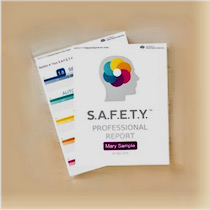
The S.A.F.E.T.Y.™ Model describes six domains of threat or reward that are important to the brain: Security, Autonomy, Fairness, Esteem, Trust and You. Understanding the needs, rewards, motivations, biases and stress triggers of each domain can provide valuable insights into yourself and others and help improve interactions, teamwork and productivity. The S.A.F.E.T.Y.™ assessment ranks and quantifies your brain’s S.A.F.E.T.Y.™ needs and explores the potential impacts of your profile on you and those around you.
Learn More